
Rock Gardens & Dry Riverbeds: A Beautiful Solution for Hot Bulgarian Climate
Discover how rock gardens and dry riverbeds can transform hot Bulgarian yards into beautiful, low-maintenance, water-wise landscapes perfectly suited to Plovdiv’s sunny climate.
GARDEN MAGIC


The Day a Garden Changed My Mind
A few summers ago, during one of those unmistakably Plovdiv days when the heat presses down like a warm blanket, I was called to a property on the edge of a village.
The homeowners were frustrated and honestly, I couldn’t blame them.
Their lawn was burnt to a crisp.
The flowerbeds were struggling.
The irrigation system ran almost constantly, yet nothing looked healthy or alive.
I stood there beneath the shade of an old mulberry tree, watching the sun shimmer across the dry soil. Then something caught my eye, a single half-buried stone near the edge of the garden.
It was simple but beautiful: grey with warm ochre veins, worn smooth by time and weather.
And I remember thinking to myself:
“This garden doesn’t need more water. It needs more stone.”
That moment changed everything.
It became the beginning of my first true rock-garden transformation in the Plovdiv region a project that didn’t just revive a yard, but completely reshaped the way I think about gardening in hot climates.
Why Now Is the Perfect Season for Rock Gardens
Spring arrives early in Plovdiv but summer arrives even earlier. By June, the heat is already intense. July and August can feel relentless, especially for traditional gardens that depend heavily on water.
This makes early spring the perfect time to start a rock garden or dry riverbed project.
During spring:
Soil is easier to work
Temperatures are mild
Plants establish strong roots
Drought-tolerant species adapt before summer heat arrives
Rock gardens are especially suited for:
Sun-exposed yards
Poor or rocky soil
Homeowners seeking low-maintenance landscapes
People who travel often
Holiday properties
Gardens where water is limited or expensive
In other words — they are perfectly suited for the Plovdiv region.


What Exactly Is a Rock Garden?
A rock garden is far more than a simple collection of stones. It is a carefully designed landscape that combines texture, structure, and drought-tolerant plants to create a garden that thrives in hot, dry conditions.
Think of it as a miniature natural landscape inspired by:
Mediterranean hillsides
Mountain slopes
Rocky meadows
Dry riverbanks
Sun-baked cliffs
A well-designed rock garden usually includes several key elements.
Natural Stones
These form the structural backbone of the garden. Large stones act as anchors, creating visual weight and permanence, while smaller stones help shape the surrounding landscape.
Gravel or Decorative Aggregates
Gravel does more than improve aesthetics.
It:
Improves drainage
Suppresses weeds
Keeps soil cool
Creates visual cohesion
Enhances contrast between plants and stone
Drought-Tolerant Plants
These are species naturally adapted to heat and dry soil. They require minimal watering and often bloom beautifully even during the hottest months of the year.
Ornamental Grasses
Grasses introduce movement and softness. They sway in the wind, catch evening light, and balance the solidity of the stone elements.
Stone Mulch
Instead of bark mulch, rock gardens use gravel mulch.
This:
Retains moisture in soil
Prevents weeds
Keeps roots cool
Maintains a clean, natural appearance


What a Rock Garden Feels Like
A rock garden doesn’t just look beautiful — it feels grounded and timeless.
These gardens echo the natural landscapes found across Bulgaria’s countryside and the nearby Rhodope Mountains.
They often evoke:
peaceful mountain slopes
rugged countryside hills
ancient rocky terrain
Mediterranean landscapes
Even in winter, when flowers fade, the structure of stone and grasses keeps the garden visually engaging.


Key Characteristics of Rock Gardens
Extremely Low Maintenance
Once established, rock gardens require minimal care. No mowing, little watering, and far fewer fragile plants to maintain.
Minimal Water Requirements
Most rock-garden plants are adapted to drought. Many store water in their leaves or have deep root systems.
Heat Resilience
Where traditional gardens struggle, rock gardens thrive. Stones absorb heat during the day and release it slowly at night, helping create a stable microclimate.
Year-Round Visual Interest
Stone structures, evergreen plants, and grasses ensure the garden remains attractive throughout every season.
Natural Fit for Bulgarian Landscapes
Rock gardens feel perfectly at home in Bulgaria. They reflect the rocky hills, traditional stone architecture, and dry summer climate common throughout the region.


What Is a Dry Riverbed Garden?
A dry riverbed (sometimes called a dry creek bed) is a landscape feature designed to mimic the appearance of a natural stream — but without water.
It is both decorative and practical, combining artistic design with clever water management.
Imagine a river that once flowed through your garden, carving a gentle path through the landscape. Over time the water disappears, leaving behind a sculptural channel of stone, gravel, and plants.
That’s the essence of a dry riverbed garden.


Key Elements of a Dry Riverbed
Large Anchor Stones
These form the “banks” of the river and create the structural framework of the design. Partially buried stones look as though they have been shaped by centuries of flowing water.
Smooth River Rocks
Rounded pebbles recreate the natural texture of a stream bed and guide the eye along the river’s path.
Gravel
Gravel fills the channel, representing the riverbed itself.
It also:
improves drainage
prevents weeds
creates visual cohesion
A Shaped Channel
The carved path creates the illusion of water flow.
Channels may be:
shallow and decorative
medium depth for drainage
deeper for heavy rainfall control
Edge Planting
Plants along the riverbank soften the stone and bring life to the feature.
Popular choices include:
lavender
thyme
sedum
rosemary
ornamental grasses
Benefits of Dry Riverbeds
Improved Drainage
A dry riverbed can safely guide rainwater through the garden, preventing puddles and waterlogging.
Erosion Control
On sloped land, stones slow water movement and prevent soil erosion.
Smart Water Direction
Rainwater can be guided away from foundations, patios, or pathways.
Strong Visual Focal Point
A curved stone river instantly becomes the centerpiece of a garden.
Beauty in Every Season
Even in winter, the structure of the riverbed remains sculptural and elegant.


Why Rock Gardens Are Perfect for the Plovdiv Region
Plovdiv enjoys abundant sunshine, but that same sunshine can make gardening difficult.
Hot summers often mean:
burnt lawns
struggling plants
rising irrigation costs
dry, compacted soil
Rock gardens offer a solution that works with the climate instead of fighting against it.
They thrive in heat, require very little water, and embrace the natural character of the land.
Choosing the Right Stones
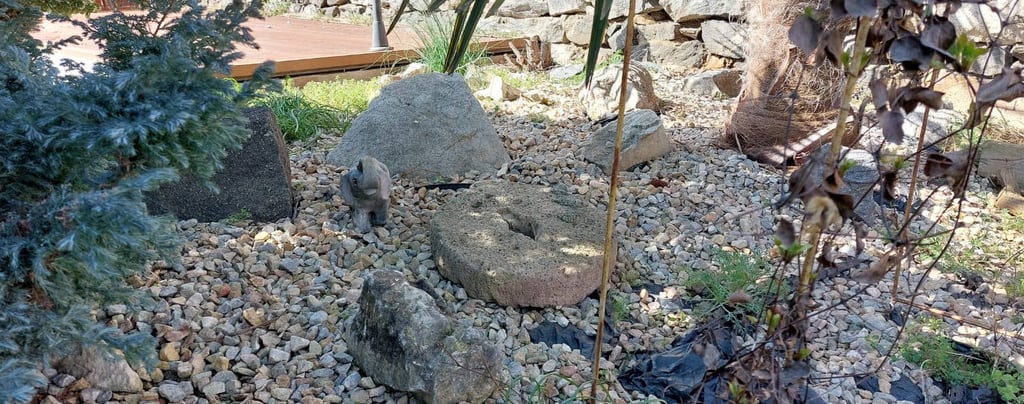
Stones are not just building materials — they are characters in the garden’s story.
Each stone has its own texture, colour, and personality shaped by time and weather.
Use Local Stone Whenever Possible
Local stone helps your garden feel naturally connected to the landscape.
Around Plovdiv, common options include:
Limestone – warm and textured
Marble fragments – bright and elegant
River stones – smooth and calming
Granite – rugged and durable
Using regional materials also reduces transport and supports sustainability.
Mix Sizes, Not Types
A common mistake is mixing many stone types together.
Instead:
choose one primary stone type
use it in different sizes
This creates harmony and a more natural appearance.
Anchor Stones First
Large stones should always be placed first.
They provide structure, focal points, and visual weight.
Bury Stones Partially
In nature, stones settle into the ground over time.
Burying each stone about one-third into the soil creates a much more natural effect.
How to Build a Dry Riverbed (Step-by-Step)
Plan the Shape
Use gentle curves and varying widths.Dig the Channel
Depth depends on whether the feature is decorative or functional.Install a Weed Barrier (Optional)
Use breathable fabric, not plastic.Place Large Stones First
These define the river banks.Add Medium Stones
Scatter them naturally between larger rocks.Fill With Gravel
Choose gravel that complements the main stone colour.Plant Along the Edges
Lavender, thyme, grasses, sedum, and rosemary work beautifully.Refine the Shape
A dry riverbed is a living piece of garden art — adjust and improve as the landscape evolves.


Best Plants for Plovdiv’s Climate
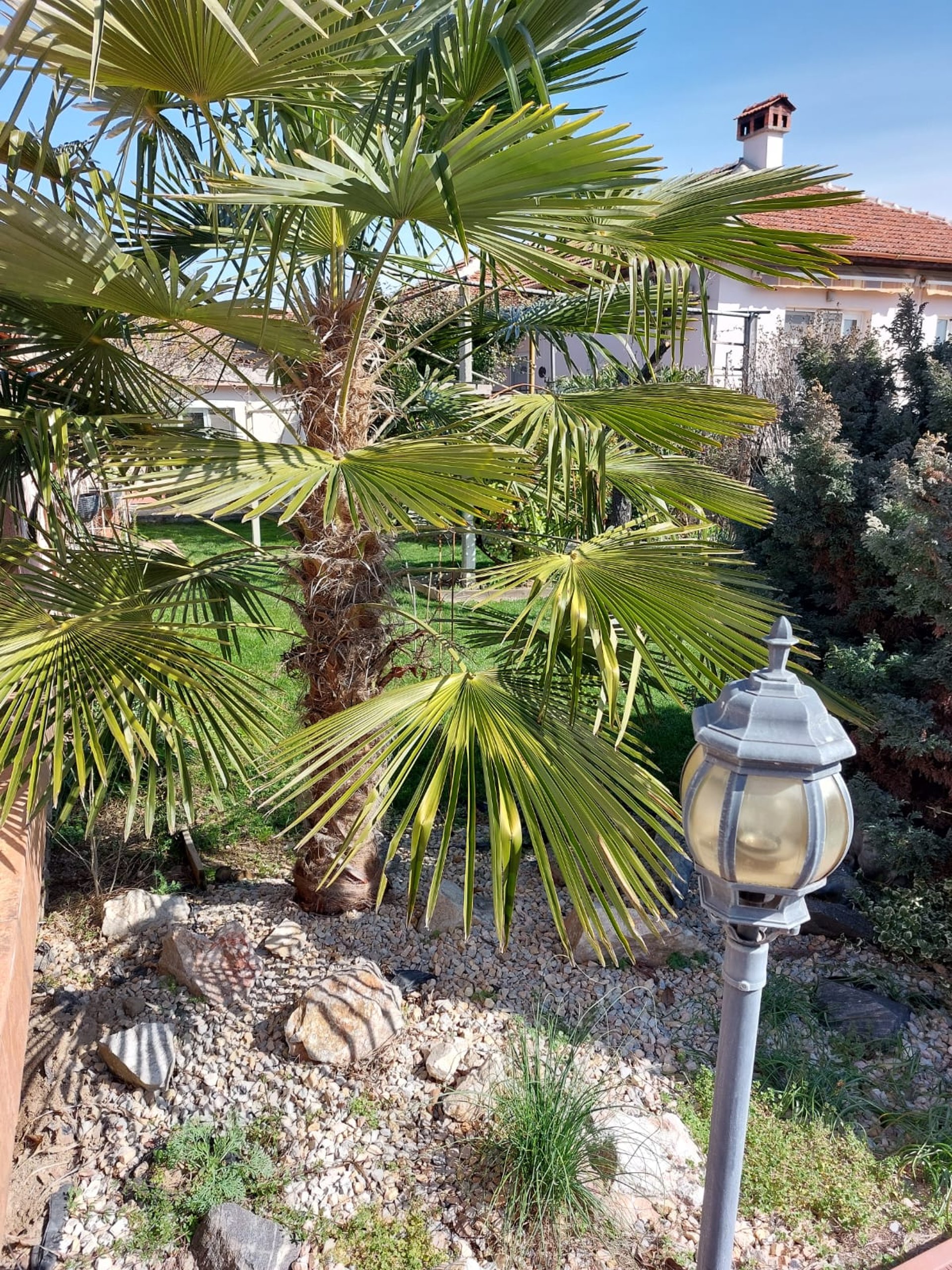
Plovdiv’s hot, sunny summers are ideal for drought-tolerant plants.
Excellent choices include:
Lavender – fragrant, bee-friendly, and heat tolerant.
Sedum (Stonecrop) – extremely resilient and perfect between stones.
Euphorbia – sculptural plants with striking lime-green blooms.
Stipa tenuissima – soft ornamental grass that adds movement.
Rosemary – aromatic evergreen structure.
Thyme – ideal for filling gaps between stones.
Blue Fescue – compact blue-grey grass for colour contrast.
Yucca – bold architectural focal points.
Sempervivum (Hens and Chicks) – perfect for rock crevices.
Mediterranean herbs like sage, oregano, and marjoram also thrive in these conditions.
Together, these plants create a garden that is:
resilient
low-maintenance
fragrant
wildlife-friendly
visually beautiful year-round


Common Mistakes to Avoid
Even beautiful designs can fail if a few key principles are ignored.
Common mistakes include:
Using too many stone types
Placing stones on top of soil rather than partially burying them
Overplanting and overcrowding the design
Choosing water-hungry plants
Ignoring drainage
Using plastic under gravel
Mismatching stone size to the scale of the garden
Avoiding these pitfalls ensures your garden will look natural and last for decades.
How Rock Gardens Support Wildlife
Despite their dry appearance, rock gardens can be surprisingly rich ecosystems.
Lavender, thyme, and rosemary attract bees and butterflies, while stones provide warm resting spots for insects and reptiles.
Lizards often make homes between the rocks, helping control garden pests naturally.
Birds also benefit by feeding on insects, perching on stones, and gathering nesting materials.
Together, these elements create a miniature wildlife habitat right in your backyard.
A Garden That Found Its Voice
Maria, an elderly woman living near Plovdiv, once told me she wanted a garden that didn’t depend on her constant care.
We built a small dry riverbed, planted lavender and grasses, and placed a single limestone boulder as the heart of the design.
When we finished, she looked at the garden quietly for a moment and said:
"It feels like the garden is breathing again."
That’s the quiet power of stone.


Transform Your Garden with Hedgie Wilder
Gardens don’t need to be thirsty to be beautiful.
They don’t need constant watering or endless maintenance to feel alive.
Sometimes the most harmonious landscapes are the ones that embrace the land exactly as it is — sun-kissed, rocky, and full of natural character.
A rock garden or dry riverbed isn’t just a design feature.
It’s a long-lasting solution that works with Bulgaria’s climate while creating a space that feels peaceful, natural, and timeless.
At Hedgie Wilder, we specialise in creating outdoor spaces that balance beauty, practicality, and sustainability. Whether you’re dreaming of a sculptural rock garden, a flowing dry riverbed, or a complete low-maintenance landscape transformation, we’re here to help.
If your garden is struggling with heat, dry soil, or constant watering, it might be time to rethink the landscape.
Let’s create a garden that thrives in the Plovdiv sun, not one that fights against it.
Contact Hedgie Wilder today to discuss your garden project, and together we’ll design a landscape that feels natural, resilient, and uniquely yours.
© BluQ EOOD. С корени в семейството. От нашия дом до твоя